Showing posts with label Book Review. Show all posts

Wednesday, December 14, 2016

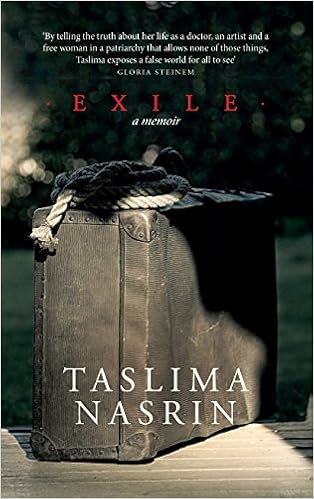
Banished from Bengal - book review of 'Exile - a memoir' by Taslima Nasrin


Image result for exile a memoir
The Bengal in the title refers to both West and erstwhile East. Both which banished writer Naslima Nasrin. Even if the accusations against Ms Nasrin, dominantly being her fanning religious extremism and of her being a mediocre writer are to be believed, the life of exile she was relegated to (and written about in her book ‘Exile – a memoir’, translation by Maharghya Chakraborty and published by Penguin) speaks loudly of the failure of a State (two States in fact) to protect an individual and its machinations to stifle freedom. The book also brings to the fore a strange love that Taslima Nasrin has for India where she continues to live, largely due to her courage and conviction, at the face of massive resistance and near lack of substantial support.

The book is a powerful account of an individual, a writer, a female, who has been let down by the powers that be. The book is a commentary on how vote bank politics trumps basic human rights. The book is a testimony to the humongous and nearly unlimited State power. The book is a note of how personal relations, friendships, acquaintances fail to stand up in times of adversity. Taslima Nasrin’s Exile is a book that through its diary entries, poems, newspaper testimonials makes all the above points and makes it strongly.
In the first chapter titled ‘Forbidden’ Ms Nasrin writes how the words, which she calls epithets, of ‘whore’ and ‘prostitute’ have become cherished for it reminds her of the stand against patriarchy that she has taken and the reader, provided one is unaware of her work in general, is given a glimpse of what a woman has stood up to. 

22nd November 2007 was the fateful day, and a chapter “Farewell, 22 November 2007” has been devoted to it, when after applying immense pressure on Ms Nasrin to leave Kolkata, where Muslim religious fundamentalists were protesting against her, she made an exit to Jaipur, from where she was to eventually live in ‘exile’ in various safe houses of New Delhi.

Taslima Nasrin has given the reader an image of her happy self in Kolkata, prior to her becoming a captive at the hands of Indian State. How she set up her house, was happily writing, was socially active and how all of it was snatched away from her just because a state government (then a CPM government) could not rein in fundamentalists and rather sought recourse in sending the author away.

Ms Nasrin asks the right questions about Muslims, which a vast majority of people wonder about. At one point (pg 153) she writes “I feel that the ‘moderates’ do not even exist.” She invokes Gandhi, Mandela, a host of editors, poets throughout the book who have given her strength to fight the mighty State and who have praised her valour. The book ‘Exile’ is also about how friendships (be it the Mr B, a minister in UPA government or any other) have ditched her in time of need and through that becomes relatable to the average human.

The powerful sections of the book are where Taslima Nasrin writes about her love for India and her dislike for the comforts of Western world where she spent 11 long years before coming to Kolkata. This narrative comes along at various points in the book. A Bengali first and then a Bangladeshi perhaps is how she has chosen to put it.

The outright disgusting part of the book is where she describes her exile of nearly 8 months in various safe houses of Delhi. Stripping a human being of basic freedom of meeting people, availing medical facilities, going about a normal life is a gross violation of human rights and Ms Nasrin was subject to that. She has provided a disturbing account of how due to lack of medical help her blood pressure situation got worse and which eventually led her to bite the bitter pill and leave India.

Maharghya Chakraborty, a PhD scholar at CSSC Kolkata needs to be commended for a wonderful translation. The literary prowess of Taslima Nasrin has been done justice to in English it can be safely said. The narration is gripping, fast moving and accommodates literary flourish along with some lovely poetry in vast sections. There could have been more clarity on the timeline of events in general. The book is a highly recommended one for those who would like to learn more about Taslima Nasrin, her love for India, her fight against religious fundamentalism, the coercion of the State, machinations of governments, and much more.


Thursday, April 28, 2016

Book Review - The Sialkot Saga by Ashwin Sanghi

 
I barely read fiction without recommendation. So when The Sialkot Saga by Ashwin Sanghi was recommended in words that really meant to be true, I took the chance. At the end of the voluminous book, I can say it was worth it. The Sialkot Saga is an interesting book which has two historical strands, one strand that begins with King Ashoka and other that is starts from the bloody India-Pakistan partition. The latter strand forms the bulk of the book with the former being interspersed before both join in the end.

The Sialkot Saga is a story of a businessman and a mafioso, Arvind and Arbaaz. It is a story of their meteoric rise, their huge thirst for success, their 'deals' and how their paths cross and their future shared and intertwined. Arvind operates largely from Calcutta and Arbaaz from Bombay and both cities have found ample description in the book.

In the early years after independence government's role was heavy handed. The Indian state which placed welfare at the heart of its policies had the government play a nanny state. Business would flourish in the strict regulation when mixed with malpractice. Arvind Bagadia, with a sharp economic sense would exactly do that. Governments overregulation also fanned the mafia who indulged in liquor, property, union and other 'businesses'. Arbaaz found his footing there.

The stories of Arvind and Arbaaz are those of planning and execution of cons of various kinds. And through them they reach dizzying heights, reaching position in Forbes richest Indian list. Their personal lives have not been given substantial importance other than their wives, one of whom (Arbaaz's wife Paromita) happened to be the others estranged girlfriend. The secret running from Ashokan empire, passing from generation to generation come together in the end with Arvind and Arbaaz's next generation who by sheer coincidence join in matrimony.

The Sialkot Saga works because Ashwin Sanghi has woven real historical events well into the plot. Be it a Shyama Prasad Mookherji telling a young Vajpayee ji to tell his story to the world, be it the anti-Sikh pogrom post Indira Gandhi's assassination, be it liberalization in 1991 or be it 9/11, at all points in the book the travel from history to present adds to the story that gets built up.

The book works because of the diversity that Ashwin Sanghi has depicted and in good detail. Be it mythology, be it working of a stock market, be it industrial policies of the 70s or be it science towards the end of the book, the research is pretty immaculate. These facts coupled with the historical events gives certain credibility to the plot, which at times veneer towards being filmy.

Overall, it is a light read and a very enjoyable one, especially for those who like a little bit of Indian political history and world history since late 1950's. The story is gripping, is fast paced, has the right masala and importantly is informative too. Do grab a copy, its worth it.

PS: I could find a small error where the name Paromita is mentioned where it should have been Abhilasha on page 352 :P

Wednesday, August 19, 2015

Book Review - After The Crash


After The Crash falls under the 'unputdownable' category. For someone who is not very fond of non-fiction, I finished the book, reading intermittently in three days. It was owing to the suspense and how Michel Bussi, the author has hung it throughout. Comparing him to Steig Larsson is surely not an exaggeration. 

The story line is simple. A plane travelling from Istanbul to Paris crashes. All passengers are killed except for a three month old baby. Two families, one filthy rich, another modest claim that the girl is their grand daughter. The case is heard by a judge who awards the child's custody to the fisherman family who lived away from Paris by the seaside. 

However the investigation is then handed over to a private detective Credule Grand-Duc, who has 18 years (the crash happened in 1980) to prove whether the girl is Lyse-Rose or Emilie, The 100 page summary of the detective forms the bulk of the novel. As the mystery deepens regarding the identity we see family members, particularly two grandmothers in both families, Marc the love interest of the girl in question and others come into picture,

There in the pages of Grand Duc's diary is explained how all modes of investigation including DNA analysis was carried, how the clues linked, how new characters came into picture to contribute to the search yet in the end was left inconclusive, Meanwhile murders occurred, doubts on a relation which could be termed incestuous if the identity of the girl was to be Emilie, and a lot of past (and earth from crash site) is dug up.

Michel Bussi has been a master storyteller with no loose ends in the novel. He has tied the ends well. An important aspect is that minimum characters in the story make for a convenient read. Each chapter only increases the curiosity. The novel set in Paris largely, focuses on the plot and does to digress too much into background.

Readers of suspense and thrillers will perhaps feel that while a few sub plots are predictable, the timely injunction of new characters and sub plots albeit not hinging on the main plot keeps the suspense going stronger. At one point one might feel that the novel is written for a movie, or rather the narration brings visuals easily. And such is the power of the book,

While there often is a risk in such books to have an ending that is outlandish or so disconnected that the reader gets put off, After The Crash has successfully avoided such a scenario. In the revealing of the identity of the girl, dots created earlier in the book has been connected, and connected well.

Do read the book. It is paced ideally and the plot is clutter free. I would recommend it.

Link: http://www.flipkart.com/after-crash-english/p/itme9gcsdbkmsyra?q=After+the+Crash+%28English%29&as=on&as-show=on&otracker=start&as-pos=p_1_after+the+crash&pid=9781474602044 

Wednesday, July 8, 2015

A Delicious Read


Informative and educative. Two words that describe Chef Saransh Goila’s wonderful book ‘India On My Platter’. Coming from a popular TV show this book generated quite some buzz and rightly so. The journey of 20,000 kilometers that Saransh Goila took discovering India’s food is a commendable exercise. That he brings both recipes and information about both food and the places he visits makes the book an enjoyable read.

The book begins with the author describing in brief the backdrop of this long food journey. After which it is more of a diary where day and place make the chapter heading. Beginning from northern India he has headed to the west then the south and via east, central India, east and north-east India and back to his source, his home in Delhi, on a Diwali night.

India provides for much diversity and as the author has rightly pointed out that a visible change in culture, language, food habits is seen ‘every 100 kilometers’. For me the book works because it provides for interesting details. It is not just a travelogue or a recipe book but the best of both. 

If one wishes to make a journey by road, one can use Saransh Goila’s book as a travel guide. Few information there comes in handy like how the likelihood of getting stuck in traffic on way to Leh is high and thus the ‘Maggi’ shop (wondering what the shop serves after Maggi ban; quite a few Maggi mentions in the book too) at the beginning provides succour. The routes and distances mentioned is minor but very necessary pieces of information. A bit more on pricing/cost would have further helped the readers.

Recipes are provided in couple of ways in the book. On one hand there is detailed recipe, as we are used to seeing and reading them, of what the Chef made in is journey and on the other hand few of them can be found in the descriptive part of the book, like the ‘aate ka halwa’ in a gurudwara. 


The interest of those who are keen on historical aspect of a place is also catered to in the book. However the veracity of a few appeared questionable an example of which is where he describes that a white thread is an uniform for cooks at Krishna Math in Udupi whereas fact is only Brahmins cook the food and the thread is not an attire but a part of them. One miss that I personally did not like was lack of food mention about my home state Odisha despite the author going to Bhubaneswar and mentioning about the dance Odissi.

History of food as described is very educative; like the fundamental difference between a Hyderabadi and Lucknowi biriyani or how elaborate a Kashmiri platter and mannerism is or how spices are kept to a minimum in north-east. For a true foodie, these are information to be cherished. 

Apart then these information the vignettes on shopping comes in handy. There can be observed a hint of spirituality, coming of age feeling in certain parts of the book and that helps connect. On a downside the editing could have been crisper; the narration style is not uniform. ‘Talk to the reader’ approach works for most part if not all. 

Overall, India On My Platter is a wonderful read, for the sheer variety that this lovely country offers and which Saransh Goila has captured beautifully. For the sheer arduous task that he has undertaken, which finds its place in record books now, he needs to be commended. Easy reading, doubling up as travel guide along with a recipe book, handy vignettes, makes the it a delightful and tasteful read.

Tuesday, February 10, 2015

Book Review - Breach by Amrita Chowdhury


Book Review - Breach
As much as the reader of this will like to believe otherwise, the fact remains that internet penetration stands pretty low in India. Though it is seeing a healthy rise, it has not captured the imagination of large swathes of the population. In such a backdrop, writing a cyber crime thriller can be a tricky business.

But full marks to Amrita Chowdhury who has written ‘Breach’ in such a manner that opens newer avenues for literature in this genre. Coupled with cyber crime the medical science that she has depicted is easy to understand. All this interwoven as a thriller makes Breach, an online meets offline affair, a good read.

The machinations of pharmaceutical companies brought about in the form of a company Acel which is at the verge of discovering a drug to cure advanced stage pancreatic cancer. The move however is sabotaged in India where the data gets leaked and the blame is pinned on the flamboyant CEO Udai Vir Dhingra. It now becomes his battle to prove his innocence. 

A sub plot that shall align with the main plot then builds up where small in the backdrop of a Mumbai college, owing to challenges, emotional turmoils and daredevilry, Madhu’s personal information is compromised at the hands of hacker Raghu. Madhu doesn’t take it lying down and learns the trick of the trade to bounce back. So there is that subtle element of women empowerment, there is the teenager issues which we all relate with in contemporary times.


Brach works because it blends the technical with the emotional. It is as much about IP espionage as it is about teenage affairs; it is as much about corporate wrangling as it is about medical ethics. The author has brought about various worlds seamlessly in this book. Though one may find the beginning less magnetic to catch the attention, once a few pages turn by, it grips the reader. Overall 'Breach' can be called as a coming of age (as much cliché as it may sound) in a genre that Indian readers and authors are not familiar with.

Saturday, November 1, 2014

Book Review - 7 Secrets of the Goddess


Book Review – 7 Secrets of the Goddess

7 Secrets of the Goddess is the fourth book in the 7 Secrets series by medical doctor-turned-mythologist Devdutt Pattanaik. In this book he tells seven tales, of Hindu goddesses, discussing narratives of feminism, gender relationship, symbolism, influences and others. As in his previous work Dr Pattanaik brings mythology to the common reader in his lucid language. He delves into discussions of traditional interpretations and questions them too. From Kali to Durga to Saraswati their origin, various stories of divergent versions, transitions in imagery and contemporary views are described. Apart than the text, the book scores a major vantage point for the relevant pictures with description which constitutes half of the book, literally.

The first chapter is on Gaia, the point of origin, the source of life and the author by virtue of his meticulous research gives us different versions of the origin. Gaia in greek, Sedna in Arctic, Adya in Tantrik traditions, Atum in Egypt are all the source of life who belonged to a female dominated culture. The chapter on Kali is exhaustive perhaps because of her finding mention in the beginning of the four thousand year old Hindu culture and the transitions that image of Kali has undertaken beginning from Tantrik traditions to neo-colonial era, from being linked to death to worshipped as Radha or affectionate mother to being associated with feminist movement.

Gauri, Durga, Lakshmi, Saraswati and Vitthai are the other chapters in the book. One does find a flow in the chapters as mentioned above and which is a welcome change in style when one compares few of the authors other books which have more number of short stories loosely bound together. In these chapters apart than describing the stories associated with the goddess in focus, Dr Pattanaik raises more relevant issues like advent of Sati tradition, bhakti phase of Hinduism, symbolic readings of mythology, Indian philosophy, relationship with wealth and numerous other narratives.

A lot of space is allotted to description of Goddess vis-à-vis Brahma, Vishnu and Shiva. Numerous stories of how Brahma’s control-seeking and incestuous behavior makes him outcast and has no temples dedicated to him, Vishnu who is intimately associated with Goddesses and Shiva who both withdraws from her and is domesticated by her are present throughout the seven chapters. Though the repeated mentions across chapters may confuse a reader, on careful reading it could be seen as an underlying theme common to all origins of deities. Also a recurring theme has been that of grama-devis, an important institution when it comes to the large swathes of villages, and which perhaps not many mythologists have given due importance.

7 Secrets of the Goddess becomes an important reading in contemporary gender debates. The shift from Vedic to Puranic culture, the role of emergence of Buddhism and its effect on Hinduism, the invasion of Islam and then the influence of another monotheistic religion Christianity had a bearing on how Goddess was perceived in those times. It could safely be said that domestication of Goddess and thereby females increased over the time. Could it then be termed unwarranted or evil or only a natural progression; 7 Secrets of the Goddess will help you raise these questions and seek their answers.

Sunday, October 19, 2014

Book review: Not Just An Accountant - conscience keeper’s account


It can be safely said that most Indians will take CAG (Comptroller and Auditor General) synonymous with Vinod Rai. A question seeking former and current CAG names might meet with silence of ignorance. And this is only natural. For the man brought to the fore skeletons from the Indian cupboard of corruption like no other. And those skeletons that shocked a nation beyond belief, shook existing political systems and perhaps proved instrumental in humiliating fall of a regime. Not Just An Accountant (Rupa) is his testimony.

The life of a bureaucrat is interesting and Vinod Rai’s career begins in a tumultuous manner with delay in his cadre assignment. He narrates the tale wonderfully which hooks interest of the reader who gets a firsthand account of how government works. His long stint in Kerala, the various tribulations, the successes have been narrated in a simple and engaging manner.

But the crux of the book lies after that. The reader of this book certainly is looking for Vinod Rai’s version of the scams CAG unearthed, reported and stuck to their reports despite tremendous opposition from the powers that be. 2G, Commonwealth, Coal, Civil Aviation, Natural Gas, the scams that caught public imagination have been described at great length.

Vinod Rai has described these monumental corruption incidences beginning with basics, then going to the technical aspects followed by probing the reader. Though one might have read at great lengths about these scams, Mr Rai’s version is an education. He provides that essential CAG angle and makes it a point in every chapter to validate and laud the effort of this constitutional body which has been questioned. This questioning has been agonizing.

The various incidences that Vinod Rai mentions elicit various responses in the reader. Be it the audacity with which A Raja stuck to following a no auction policy, the creation of a body without any governmental control to seat Suresh Kalmadi, flouting norms to give Reliance more than 7 thousand square kilometers of area for excavation, buying aircrafts and selling them for a 5 times lesser rate, will shock the reader learning about these in detail for the first time.

During the release of the book the mention of role of former Prime Minister Manmohan Singh’s in these scams was a talking point. Vinod Rai has made his observations of the PM’s role very clear. In the 2G scam, he writes how on two occasions, in response to A Raja’s letter, the PM replied with the text “I have received your letter of (date) regarding recent developments in the telecom sector”. A similar stoic silence in the Coal block allotment scam is mentioned. Overall the impression is sent of a PM who has acted like Dhritarashtra of Mahabharat.

The book is interesting for one interested in policy issues. A bureaucrat with 40 years of experience explains concepts of Principal-Agent problem, policy of past, shift in policy and obfuscation of policy. The book is an essential read for those who wish to get a comprehensive view of role of CAG, the technical aspects of scams from 2G scam to Reliance’s role in KG basin excavation, and aspects of an honest bureaucrat’s life.

Thursday, October 16, 2014

Under Delhi - defining dark humor in India


If you think of a story about crime against women, particularly rape, and you think of comedy, they will not fit in a single frame. May even be unthinkable. But that story falling under the genre of dark humor, of melancholic humor is dished out effectively by Sorabh Pant, one of India’s leading stand-up comedian, in Under Delhi.

Tanya Bisht, a vigilante by night and stuck-in-shitty-job by day girl in Delhi (yes, Delhi of course) drives a car called anti-balatcar and metes justice to those rape accused who are let of by weak arms of law. The car runs under a false ‘Crushed Grapes’ company whose tag line is With Grape Power Comes Grape Responsibility! (yes, seriously). She beats those men black and blue and collects the pinky as a souvenier.

That she has been orphaned in childhood, raped by office boss, makes her soul demented. But she has a tongue for slapstick, morose humor. She has an office filled with chauvinists and PPT presentations and sells homes that would probably never get constructed.

Her estranged mother, Sakshi Bisht, resurfaces as her guardian angel, one who had been also providing her list of the freely-roaming-accused. Along with her mother, two policemen Mr Sharma and Ali who actively support the vigilante cause. Mr Sharma who is her mother’s boyfriend turns out to be the one who has been a father in the absence of real one for Tanya.

Then there are a Ramesh-Suresh (Gill) duo. Ramesh Gill is the suave villain in the plot who having wronged her daughter, now has turned a feminist and wants Tanya to kill the wrongdoers. However Tanya and her team are on the ‘right side’ of the law and would not kill any person. A game ensues and reaches a climax full of bullets and emotions.

First things first. Sorabh Pants writing is hilarious (that already has been said by Abhishek Bachchan though). There is no way if one is reading the book won’t burst into laughter on occasions, or if one isn’t the overtly expressing types, have sniffing type laughter.

The IIPoM (International Institute of Ponytail Management), Anirban Sir, the caricature of the Bengali character Robindro, description of a Gurgaon farmhouse, is really funny. Mr Pant’s jokes draw on politics of the time with references to Soniaji and MMS; they draw on perceptions of places like Haryana and Gurgaon and Delhi; they draw on fallacies of the society with respect to a woman; they draw on Hollywood movies; and they draw on a myriad of things which keeps the readers interest in the humor intact.

The book works not because of the humor alone but because he has maintained the suspense in the plot which almost makes it unputdownable. At 256 pages it is a light and absorbing read. The book also works because it hits you at the right places. In the manic and adult comedy Mr Pant drives home issues that our women, half of our society faces. The over-the-top, in your face, dirty truth he brandishes could unsettle one sometimes.

It is laudable that Sorabh Pant has brought out a book on that genre of dark humor which is hardly given due importance in our popular culture, and in his inimitable manic style has done justice to it.

Friday, September 19, 2014

Book Review - One Life is Not Enough by K Natwar Singh


Verdict: 4 / 5
One Life Is Not Enough should not be read for the controversy regarding power centers in the UPA II. It should not be read to peek into misdoings of Manmohan Singh. It should not be read for seeking answer to why Sonia and Priyanka Gandhi sought audience with the author. The book is much more than that and much less about the above popularity gaining gimmicks.

Kunwar Natwar Singh is a career diplomat and Congressman of many decades. Someone who was born with a silver spoon, studied at best places in the country and abroad, got posted to coveted locations, who has been in the thick of political and bureaucratic activities in India and abroad, will always have something interesting to share. And share he does.

In the early life the way schooling was conducted, in the college years the effect of national movement, the qualifying for foreign service are interesting parts of the initial segment. The following description of the author about his stint as IFS in China is in detail. It gives a perspective of Chinese sensibilities and foreign policy. The other sector which has been detailed is Natwar Singh’s posting in the UN. In those chapters one can have an insight into how diplomats function, what challenges they face and how they react to them.

Kunwar Natwar Singh also held the tricky post of Ambassador to Pakistan. Therein his interaction with General Zia is nothing less than interesting. He has in his book not forgotten to mention the many cultural stalwarts be it Forster, R K Narayan, Ahmad Ali, Santha Rama Rao or a young MF Hussain (a lanky tall person of whom a photo is provided too), he has close association with. His scholarly work can be dated back to days when he used to review books or bring out compiled works.

Amidst all these one can sense his close association with the Nehru-Gandhi family, which was initially brought about by Mrs Hutheesing (Nehru’s sister) whom he addressed as ‘maasi’ (aunt). A mix of personal contacts coupled with astute professional skills saw the rise of Natwar Singh. His wondering about how he got into the powerful ‘Secretariat of Indira Gandhi is his trying to be modest. But all said, here is a man who was privy to top decisions of the government of the day and had access directly to the PM.

The book lacks more information about his personal life. His wedding to Hem, daughter of the King of Patiala, has only been given attention. But relationships amidst such demanding careers, untimely demise of his daughter come about, his son’s political career and other aspects have not been covered in this autobiography. If he is a good father, a good husband are questions that have no answers in this book.

Coming to the parts that stirred political wind, his shift in description of Sonia Gandhi is worth noting. Having called her an epitome of ‘debonair civility’ Mr Singh describes how she has metamorphosed into a harder skinned politician. And this shift in loyalty has been owing to his name being dragged in the Volcker committee report (food-for-oil scheme). He has not been charitable to Manmohan Singh and makes scathing remark on Indo-US nuclear deal. He even suggests that it has been an American lobby to keep him away. Towards the end the book turns vitriolic with references like ‘kettle calling the pot black’, leaving the reader wondering the backroom politics or the lack of it.

The book will interest those interested in the political stories of the past, it will interest those who have a liking for international affairs. The book is also a testimony to impermanence in politics. A man who rose to great heights, knowing giants of world politics, feasting with them, gaining unfettered access to Prime Ministers of India, relegated partly into political abyss owing to indictment in a scam, has interesting tales listed in his autobiography. It is a pleasurable read, the writing holds attention, the sequence of events placed correctly and results in considerable examination of Kunwar Natwar Singh’s life. After all the book began with Plato’s quote – “an unexamined life is not worth living”.

Friday, September 12, 2014

Assortment of the best - 99


Many a times in order to taste the cuisine of a place people order a thaali. A thaali has a variety of components and give an overall picture about a type of cuisine. 99 is an extremely tasty thaali which gives the reader a taste of a literary genius of contemporary time, Khushwant Singh.

Though I was introduced to Khushwant Singh’s writing with 'A mark of Vishnu' when I was in class X, I read a little of the famous 'Train to Pakistan' later. 99, published on his birth anniversary, is Alephs tribute to Mr Singh and has 99 pieces of his writing selected from different genres. The 15 sections that the book is divided into, like Family matters, The Sikhs, How to Live, How to Die, Sex on my mind, A passion for poetry among others, is a testament of how prolific he was.

The mastery of the writer is reflected in each genre. How he describes early life in Hadali, how he despite not being a historian gives a fresh and detailed look into Sikhism, his political and social views, his defense or the lack of it for being termed a womanizer, his controversial support of Emergency, his famous or infamous views on famous people, and many such masterpieces.

It is indeed interesting that one who was born to one of Delhi’s foremost builders, did not choose to use the luxury to a point where his aversion for litigations prevented him for inheriting great wealth. An agnostic who produced probably the most seminal work on Sikhism is remarkable. A voice which as editor of Weekly was heard in corridors of power and equally in hush-hush circles for the in-their-face remarks.

Each piece puts the reader at ease with the writer. The narration, simple prose most of the times, is always gripping, the sense of humor unparalleled and the insights the writer gives into his own life makes 99 an unputdownable one. It is as if he talks to you, tells you a story, and explains as a teacher through his works.

For one who has only heard of dirty jokes of Khushwant Singh (which he claims he knows all that exists in the world!) or have over the years formed an opinion of him should read 99 just to taste the excellent variety that exists in the cuisine of one of India's finest writers and public intellectuals, Khushwant Singh.